
Building Comb and Growing Our Darwen Apiary
Kevin Riley ·
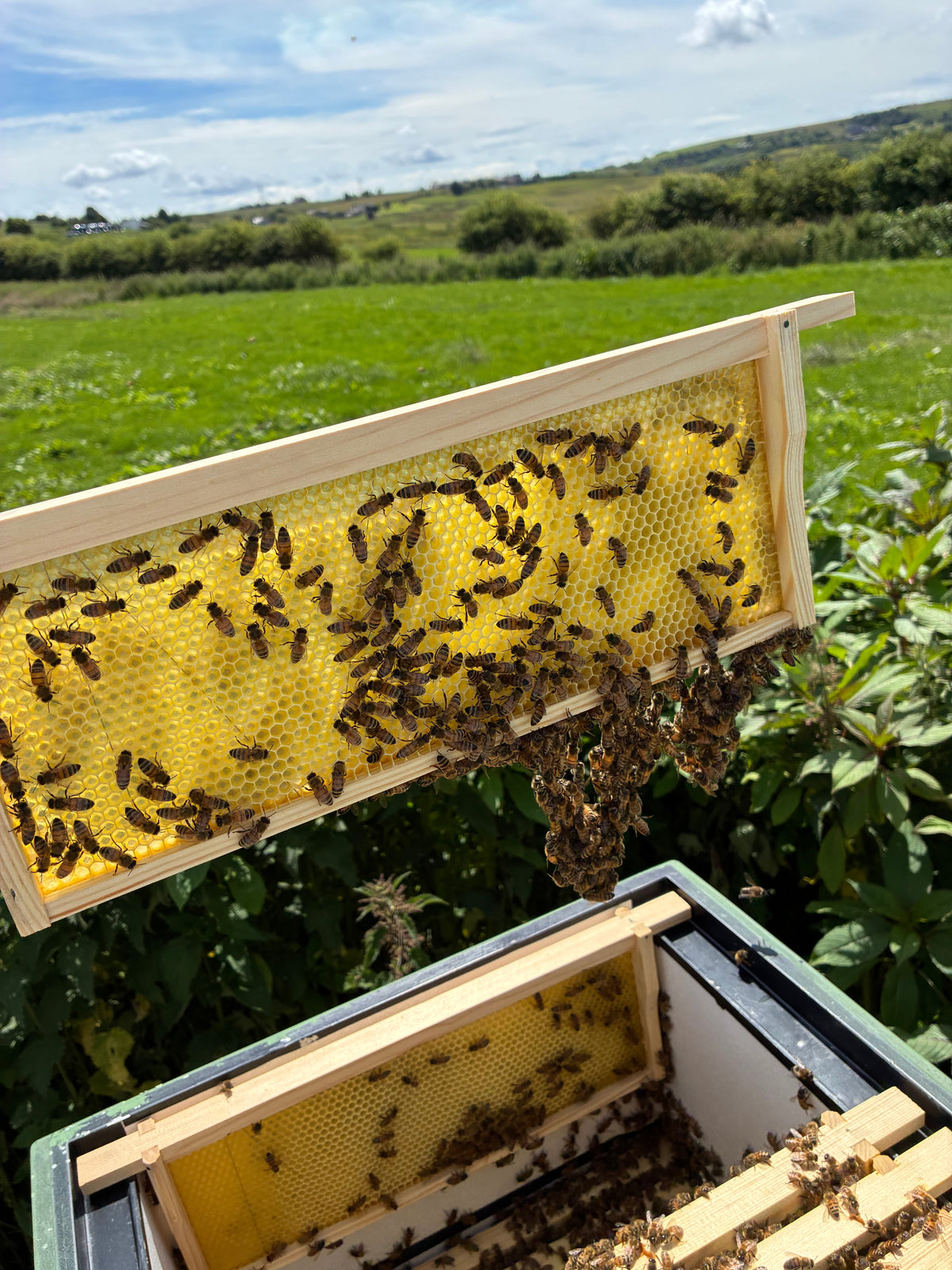
Looking back at June 2026, as our bees built more comb and the Farm Side apiary gained a new hive stand.
After H1 received its first honey super on 23 May, June brought more of the work that comes before a honey harvest: drawing out foundation and creating cells in which to store nectar.
From outside, a hive can look much the same from one visit to the next. Inside, the bees were turning more frames of foundation into usable comb. It was another part of our first beekeeping season in Darwen, Lancashire, that made me appreciate how much work goes into every jar.
Building the comb before storing the honey
Foundation is the sheet fitted inside a frame to give the bees a starting point. The bees draw it out into the three-dimensional wax cells that make up the comb. Through June, ours spent time drawing more frames so they had space to store honey.
Making beeswax takes energy, supplied by the sugars the bees consume. So a colony building fresh comb has more to do than simply fill an already finished set of cells. It has to create that storage space as well.
I haven’t put an exact honey-to-wax ratio on it here: the point for our first season was seeing that comb building was a substantial job in its own right. Fresh foundation in a box was only the beginning.
Festooning bees on a super frame
One of my favourite photos from this stage shows bees hanging together below a super frame. This behaviour is called festooning: the bees link their legs to form chains or a hanging curtain.
Festooning is associated with wax production and comb building. In the context of the new comb I was seeing, it was an encouraging sight. It gave me another small detail to notice as I learned to read what was happening inside the hives.
There is still more to understand about exactly how festooning works. For readers interested in the behaviour, UC Davis’s explanation of festooning describes its connection with bees drawing new comb.
A new hive stand for Farm Side
There was progress outside the boxes too. At the end of June, the new hive stand went to the Farm Side site. It is the stand that our hives are sitting on as I write this account later in the year.

The photo shows the stand in use at Farm Side. Alongside the bees steadily building their comb, getting the stand into place was another step in putting the apiary together.
A look back: searching for a queen
The clip below belongs to the earlier queen troubles covered in Growing Colonies and Queen Troubles. It is a look back, rather than a new event I can confidently date to June.
I shook the bees onto a sheet and let them walk back into the hive, hoping to spot the queen. I didn’t find her. I think this was before the requeening, although I can’t now pin down the exact timing.
It is another glimpse of the learning behind the season: some visits brought visible progress, while others left me with questions still to answer.
The work behind our Darwen honey
June’s story was about building: the bees creating more comb inside the hives, and me getting their new stand ready outside. Those jobs were part of the groundwork for the honey that came later.
Follow the earlier chapters in From the Hive, starting with our first two nucs in April, or browse the Darwen Honey Co shop.