
H1’s First Honey Super: Watching the Bees Build Up
Kevin Riley ·
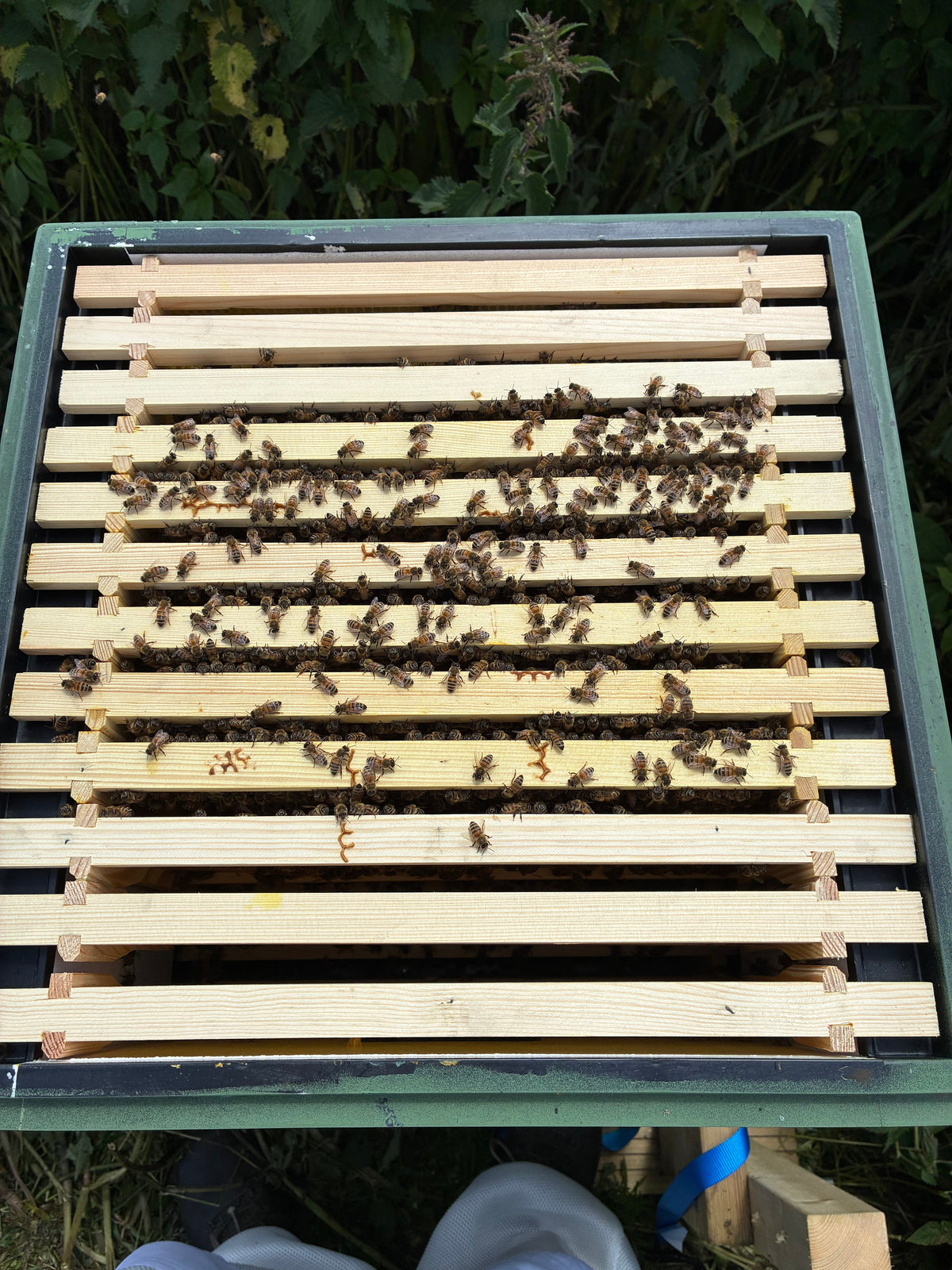
Looking back to 23 May 2026, when H1 received its first honey super at Farm Side.
After the very different starts our first two colonies had made, H1 continued to give me plenty to watch. This was the colony from Forager Bees, which had built up well with early feeding and moved from Keith’s allotment to Farm Side at the start of May.
On 23 May, H1 was on double brood and I added its first honey super. It was another milestone in our first season keeping bees in Darwen, Lancashire: a box above the brood nest where I hoped the bees would eventually store honey.
Adding the first super
For readers who are new to beekeeping, double brood means the colony has two brood boxes. A honey super is an additional, shallower box containing frames for the bees to build comb and store honey.
There were still frames for the bees to draw out in the brood boxes when I put the super on. Looking back, I think I may have added it a little early, with that work still unfinished below.
That is my reflection on the timing, rather than a definite verdict that it was wrong. What I can describe clearly is what I saw the colony do afterwards.
Up through the centre first
The bees worked upwards through the centre of the boxes, drawing comb and filling it as they went. They didn’t finish every frame across one box before moving into the next.
Instead, the centre was where the progress happened first. Watching that pattern develop gave me something new to look for during inspections: how the colony was using the space I had given it.
The first nectar in the super
As soon as the bees had drawn out the centre frame in the super, they began putting nectar into it. They were using the new comb straight away.
It wasn’t a box of finished honey yet, but seeing nectar going into that first drawn frame was an encouraging step. Only weeks earlier, I had been bringing a small colony back from Manchester. Now I was watching it build comb and store nectar in its first super.
Then they spread sideways
Once the bees reached the top box, they began moving sideways through the frames in each box. The pattern I observed was upwards through the middle first, followed by progress out towards the sides.
This is how H1 developed at that point in the season. I’m recording what happened in this colony, rather than suggesting every hive will follow the same pattern or that the date alone tells you when to add a super.
Learning by watching H1 grow
Our first spring had already included queen setbacks in the other colony. H1 offered a different lesson: watching a growing colony decide where to work, and reflecting on whether I had given it more space a little sooner than necessary.
Those observations are part of the story behind Darwen Honey Co’s local honey. Long before extraction and jars, there were frames to draw, nectar to store and a new beekeeper learning from what the bees actually did.
Read the previous chapter, Growing Colonies and Queen Troubles, or go back to collecting our first two nucs. You can also explore From the Hive and browse the Darwen Honey Co shop.